AI an Intro
| సైటు: | Justwrite |
| కోర్సు: | Research Skills for Impactful Knowledge Creation and Application: From Academic Publishing to Community Practice |
| పుస్తకం: | AI an Intro |
| ముద్రించినది: | Guest user |
| తేదీ: | శనివారం, 19 సెప్టెంబర్ 2026, 6:18 PM |
1. What is Artificial Intelligence?
The original definition of artificial intelligence by McCarthy (1956, cited in Russell & Norvig, 2010) is:
every aspect of learning or any other feature of intelligence can in principle be so precisely described that a machine can be made to simulate it. An attempt will be made to find how to make machines use language, form abstractions and concepts, solve kinds of problems now reserved for humans, and improve themselves.
Zawacki-Richter et al. (2019), in a review of the literature on AI in higher education, report that those authors that defined artificial intelligence tended to describe it as:
intelligent computer systems or intelligent agents with human features, such as the ability to memorise knowledge, to perceive and manipulate their environment in a similar way as humans, and to understand human natural language.
Klutka et al. (2018) also defined AI in terms of what it can do in higher education
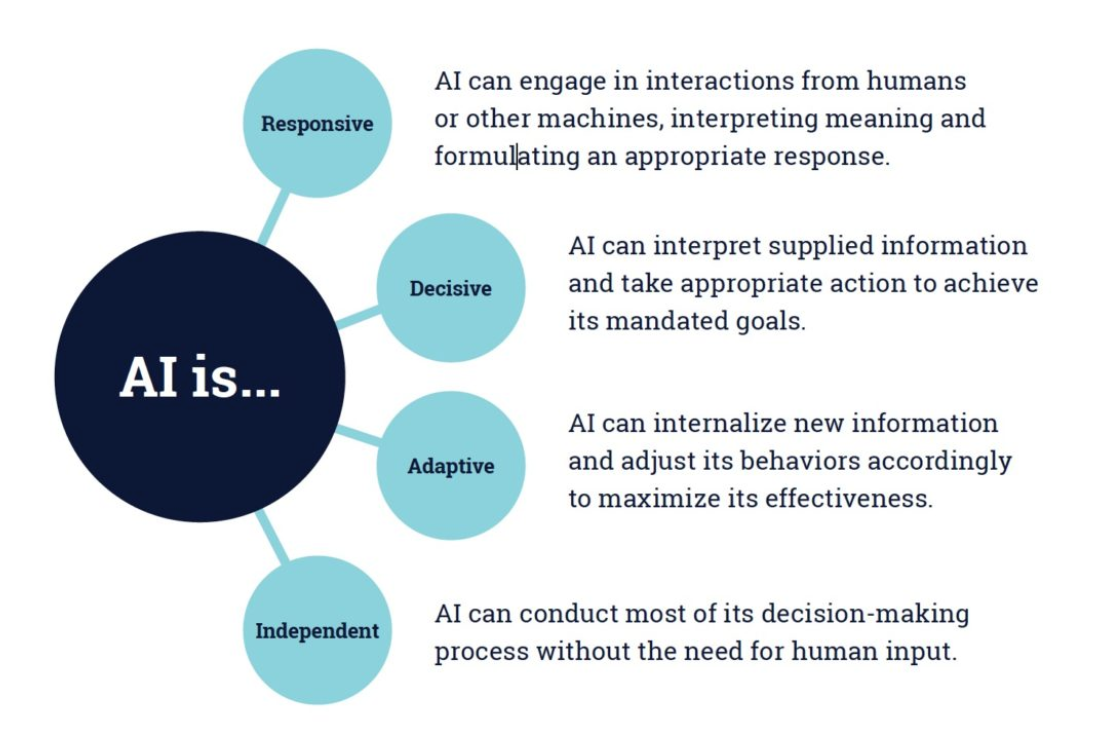
What AI can do in education Image: Klutka et al. (2018)
"What is AI?" by AI4Teachers is licensed under CC BY 4.0
2. AI adoption trends
The idea of artificial intelligence (AI), where computers doing things that humans would normally do, is not new. Generative AI, on the other hand, is a type of artificial intelligence system which generate text, graphics, etc. in response to the prompts or signals given to the computers. This has suddenly became popular across the globe in all fields used by all walks of life and academia is not left behind. Generative AI made its debut into academic institutions in the form of ChatGPT and other applications in the second half of the year 2022.
One million people signed up for ChatGPT in the first five days after its launch in November 2022 (Statista)
According to a report presented by OpenAI itself, ChatGPT was first made available to the public on November 30, 2022. In just five days, the app gained over a million users. - from https://businessolution.org/es/chat-gpt-statistcs/

3. AI no longer a futuristic concept - is it a friend or foe?
AI is everywhere and used by almost by everyone. In academic world teachers and students are using AI to enhance teaching learning experiences. From personalised learning to automated grading systems AI can do a lot to take teaching learning environments to next level. Apps like Duolingo may play an important role in language learning classroom. Where teachers can provide personalised lessons to make language learning effective for diverse students of the classroom saving teachers time and efforts to build personalised lessons. However usage of AI may enhance teaching experience by saving time, creating accessible learning, fostering creativity, it also poses challenges. Like it may tamper originality and critical thinking capabilities of both teachers and students. To address these kind of concerns many institutions across the globe are introducing guidelines to use AI ethically as it ensures the presence of AI in teaching learning environment but with some ethics.
When this thought comes to mind that AI is a friend or foe? the answer may depend upon how it is used/itegrated in the situation. No doubt that when used responsibly AI can enhance teaching learning experiences. This will help teachers to focus on meaningful interactions, making their students achieve their learning outcomes. It is users responsibility to use it responsibly. Otherwise it may give adverse results. With its pros and cons AI can truly be a friend in shaping future education system.
Is using AI cheating: What are the teachers’ reactions? by AI4Teachers is licensed under CC BY 4.0
4. Various types and applications of AI in Education
There are different possible areas of application of AI in education. Zeide (2019) makes a very useful distinction between institutional, student support, and instructional applications.
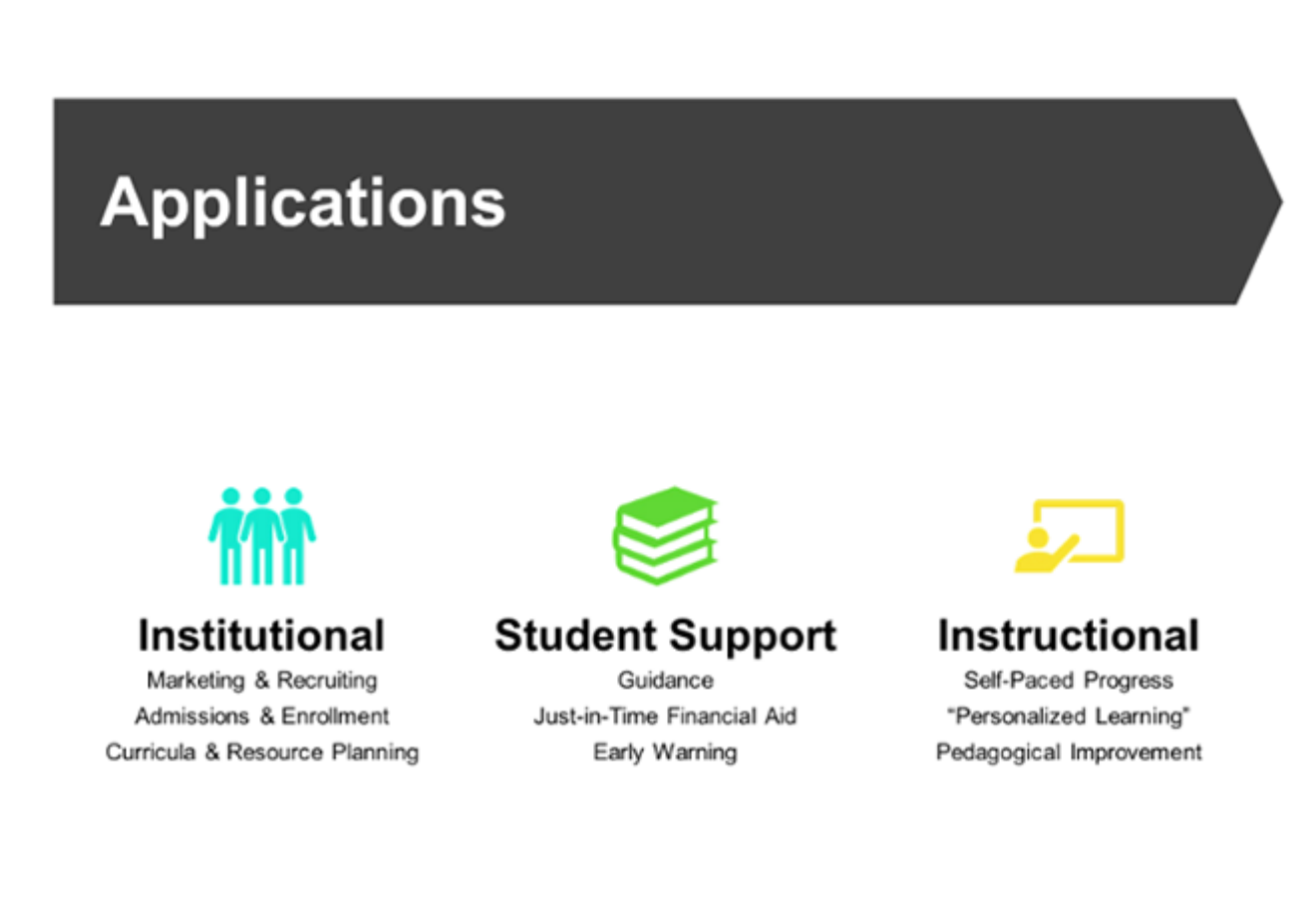
Before we talk about the applications let's read and watch little about AI.
AI is all about Machine Learning, Natural Language Processing, and Computer Vision enabling brilliant innovations in education. Not to be scared looking at these phrases. To simplify machine learning given below is an excellent video created by AI4Teachers is licensed under CC BY 4.0
What is Machine Learning by AI4Teachers is licensed under CC BY 4.0
Currently there are many applications like adaptive learning systems for example, these systems are capable of supporting teachers recommending appropriate teaching strategies based on student performance, automated assessment tools like automated grading mechanisms, feedback providers which may provide students guidance when they are confused in their work or they provide assistance to students in completing assessments by providing respective resources that help them in their assessment questions, virtual tutoring systems which may provide teaching content to students while supporting them with adaptive feedback and hints to solve questions related to the content, also paralally working on detecting students’ difficulties when working with the content or the exercises, speech recognition tools to support language learning etc. making teaching learning environments more robust by reducing the time consumption and providing teachers their valuable time to utilise in betterways to engage students in more meaningful ways. (fromTeaching in a Digital Age: Third Edition - General Copyright © 2022 by Anthony William (Tony) Bates is licensed under a Creative Commons Attribution-NonCommercial 4.0 International License)
Educators can utilise machine translation tools to create multilingual resources, communicate with non-native speakers, and support diverse students in language acquisition.
While these tools are powerful tools, it is essential to review and refine the translations, especially for grammar, bias, cultural nuances and domain-specific terminology, to ensure accuracy and appropriateness.
Google Translate, Copilot, ChatGPT, and DeepL are few examples of AI tools used for machine translation and other language-related tasks.
- Have you ever tried https://translate.google.co.in/Links to an external site. to translate Webpages or Documents?
Sometimes these technological advancements may give errata, for example in a classroom if a system is predicting students behaviour and recommending learning path, it's teachers responsibility to evaluate the machines prediction and decission and act accordingly. Machines may not be always correct. Do you agree?
For example if a student is using a language learning app and by mistake gave few wrong answers or may be tired that day aand gave wrong answers and the app may start giving simpler questions assuming students need easier questions as their level of understanding is low, this makes the learning journey not only boring but may demotivate student to go further. Here the machine could not account external factors.
4.1. List of AI tools
ChatBots
Visual and Design
AI Tutoring and Collaboration
Content Creation / Lesson design / Research
- QuestionWell
- Khanmigo
- Nolej
- TeachAid
- Brisk Teaching
- Diffit
- Curipod
- MagicSchool.ai
- SchoolAI
- Antimatter Sorcerer
- Education Copilot
- Eduaide.ai
- Formative AI
- Quizizz AI
- Conker
- Twee
- Magic Padlet
- Google NotebookLM
- gotFeedback by gotLearning
- Grammarly
- Quillbot
- Goblin Tools
- Hello History
- Chat PDF
- Suno
- summarize.tech
4.2. AI Prompts
Using ChatGPT in language teaching, an example:- A teacher can ask students to engage in conversations with ChatGPT about a language traditions or its literature. And ask questions about famous poets, literary events, or feature films to gain a deeper understanding of the cultural context of that language. And ask students to present their experience while giving a reflection of the responses. This will not only help students to learn language but can add new and fun way of language learning experience.
Below is a simple guide on writing prompts.
5. Ethical Challenges and Considerations of Using AI in Education
Though there is immense potential benefits in using AI in education, there are also equal challenges and many concerns to address. The first and foremost that we hear is bias in AI algorithms, which may give results that are not inclusive and show disparity in results due to inadequate or erata in data provided.
Another most important concern is data privacy. Most of the times these applications require lot of personal data to provide effective results which may be a breach/invasion into teacher / students privacy. Very clear data privacy policies regarding data collection, storage and its usage must be clearly stated while using any tools to safeguard the privacy of teachers and students data.
Depending on AI tools with certain precautions may give some good results but over dependency may tamper teacher-student interactions lowering the critical and creative thinking role of teachers. This may also be a major concern that need to be taken care of. while using AI technology in education.
Eventually AI literacy is important for both teachers and students. They must be trained to use AI tools responsibly in ethical ways to maximize the benefits and minimize the risks.
Addressing such challemges may definitely help teachers and students to enhance their teaching learning experiences.
5.1. Ethical Challenges and Considerations of Using AI in Education
York guidelines on Ethics for Faculty, Staff, and Students
Please refer to the page from York University Page on AI usage. You can read guidelines like AI for Faculty; AI for Students; AI for Graduate Studies; Ethics. (https://www.yorku.ca/teachingandlearning/gen-ai/) along with more details on
- General Limitations and Risks of Generative AI
- GenAI and York Values
- Intellectual Property, Copyright, and Data Security
5.2. York University's guidelines on using AI technology for academic work
- Please refer to the page from York University style guide. (https://researchguides.library.yorku.ca/c.php?g=679413&p=5316500)